


How Do Temp Jobs Help Companies Manage Seasonal Work?
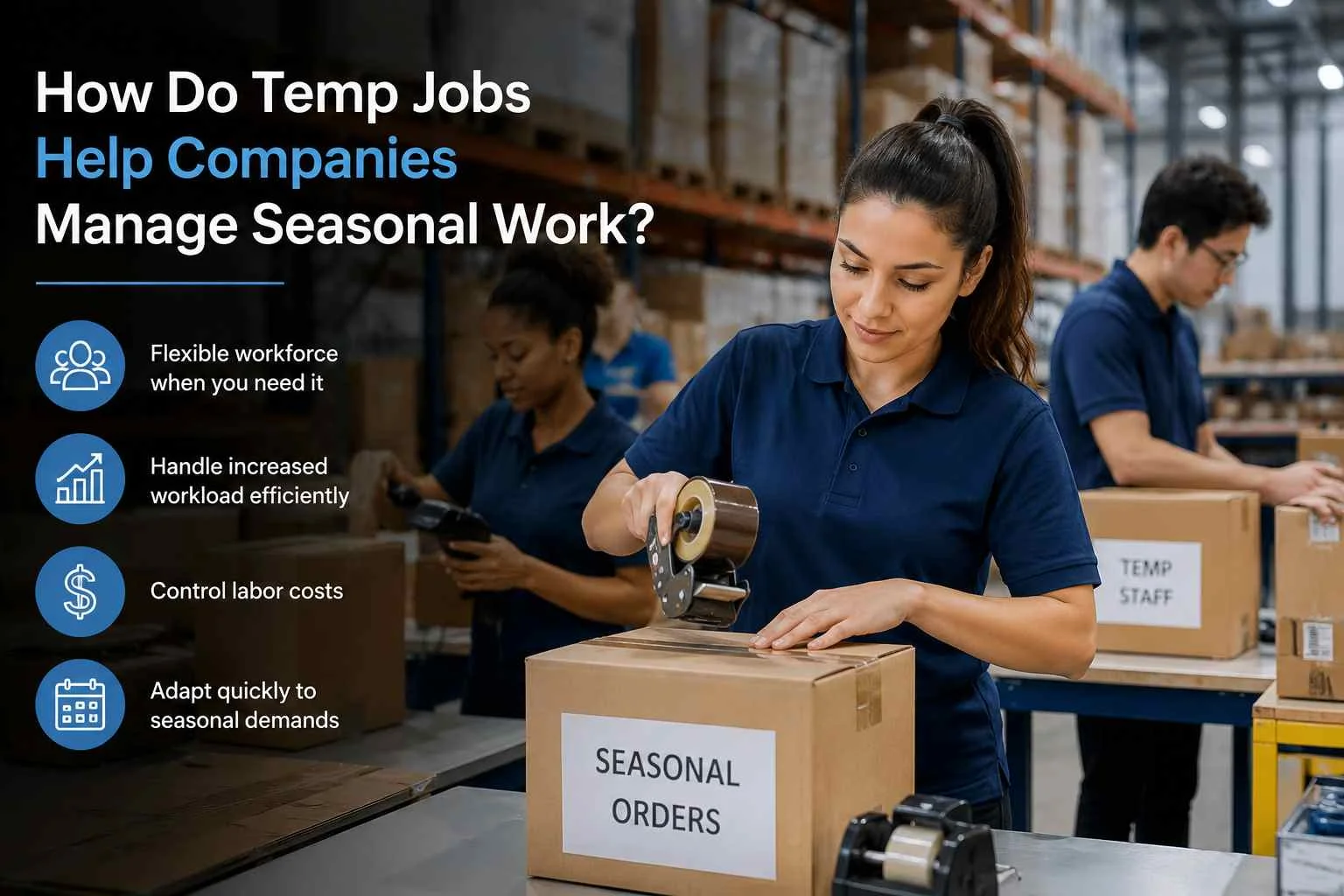
Temp jobs help companies manage seasonal work by quickly filling temporary staffing needs. They allow businesses to quickly adjust their workforce without committing to long-term hiring. Instead of committing to long-term hires, businesses can bring in temporary workers.
These workers are aligned with specific company cycles and operational demands. This lets companies scale up quickly and keep operations smooth during peak seasons. It also helps them avoid delays in hiring and the costs of permanent staffing.
Key Takeaways
- Seasonal demand can be met by adjusting worker levels through temporary jobs.
- Support of recruiting agencies accelerates the employment of qualified individuals.
- Standardized recruitment method allows for consistent evaluation of candidates.
- Seasonal workforce planning minimizes operational gaps and delays.
- Temporary staffing aligns available workers with fluctuations in business demand cycles.
Seasonal Staffing Simplified: Temp Jobs With Recruiting Agencies
Recruiting agencies connect employers with temp workers based on skills, availability, and demand. They handle the entire process from sourcing to placement while maintaining workforce compliance. A recruiting agency like Parker Beth can quickly fill peak-period gaps with pre-screened candidates. This avoids restarting the hiring cycle, ensuring fast and well-matched staffing.
How Temporary Jobs Help You Cope With Seasonal Demand
Temp jobs help firms ramp up staff for seasonal peaks. These include peak retail seasons, tourism surges, and agricultural production cycles. Structured hiring lets companies adjust workforce size without long-term commitments.
This method reduces the demand on permanent staff. It also ensures continuity of operations. Recruitment agencies make seasonal hiring easier through structured hiring steps. This improves the efficiency of workforce allocation.
Recruitment agencies support structured seasonal hiring through several key processes:
- Sourcing and screening of candidates based on job needs.
- Short-term assignment scheduling and onboarding.
- Checks on labor standards and compliance with employer regulations.
Workforce segmentation assigns tasks by skill, urgency, and complexity to manage seasonal demand. It prioritizes key operations while maintaining baseline services.
Efficiency of the Recruitment Process of Seasonal Staff
Seasonal recruitment involves defining workforce needs and screening candidates. It also includes assigning roles within a set timeline to meet demand surges. Agencies use structured processes to ensure consistent hiring decisions. Digital tools and labor data improve staffing efficiency. Recruitment technology streamlines matching and reduces manual screening. This enables faster hiring and quicker response times during peak seasons.
Workforce Forecasting and Scheduling for Seasonal Hiring
Workforce forecasting directly ties into seasonal cycles in the deployment of temp jobs. Companies use historical demand, sales trends, and forecasts to predict labor needs. This allows recruitment organizations to develop talent pools ahead of peak demand periods.
Scheduling systems match worker availability to shift requirements. Thus, staffing levels stay steady even if demand varies on a daily or weekly basis. Forecast accuracy in logistics, retail, and hospitality affects service consistency during peak times. This directly influences how uniformly services are delivered when demand is high. These forecasting models use temp jobs for flexible staffing without increasing long-term costs. This helps firms quickly meet demand spikes while managing workforce size and distribution.
The Role of Temporary Staffing in Modern Workforce Strategy
Overall, temp jobs have become a practical and strategic solution for businesses. These businesses often experience seasonal fluctuations in demand. Using temporary staffing companies can quickly respond to market changes. This helps them avoid the risks of overstaffing or long-term hiring commitments.
This flexibility improves operational efficiency while helping control labor costs. It also helps maintain productivity during peak periods. It also helps maintain consistent service quality during sudden demand increases. At the same time, temp jobs offer flexible or short-term work opportunities.
With forecasting, processes, and staffing agencies, temp work helps ensure smooth operations. This is especially important during busy seasons. As demand changes, temp jobs stay key for employers and workers. They offer a balanced solution for both employers and workers.
Frequently Asked Questions
1. What is temporary employment in seasonal staffing?
Temporary employment is short-term work used during seasonal or peak demand periods.
2. How do recruiting agencies handle seasonal hiring?
They screen candidates, keep talent pools, and quickly place workers as needed.
3. Why are temp jobs important for workforce planning?
They give companies flexibility to adjust staffing levels without long-term hiring commitments.
4. How does the recruitment process support seasonal work?
It standardizes hiring steps so workers can be quickly sourced, screened, and deployed.
5. How do temporary jobs support businesses during high-demand periods?
They allow companies to scale up staff quickly to meet higher demand and avoid delays.
6. What makes seasonal staffing efficient through agencies?
Agencies use data and recruiters to speed up hiring and match workers.