




How Do Recruiting Companies Handle Applicant Assessment?
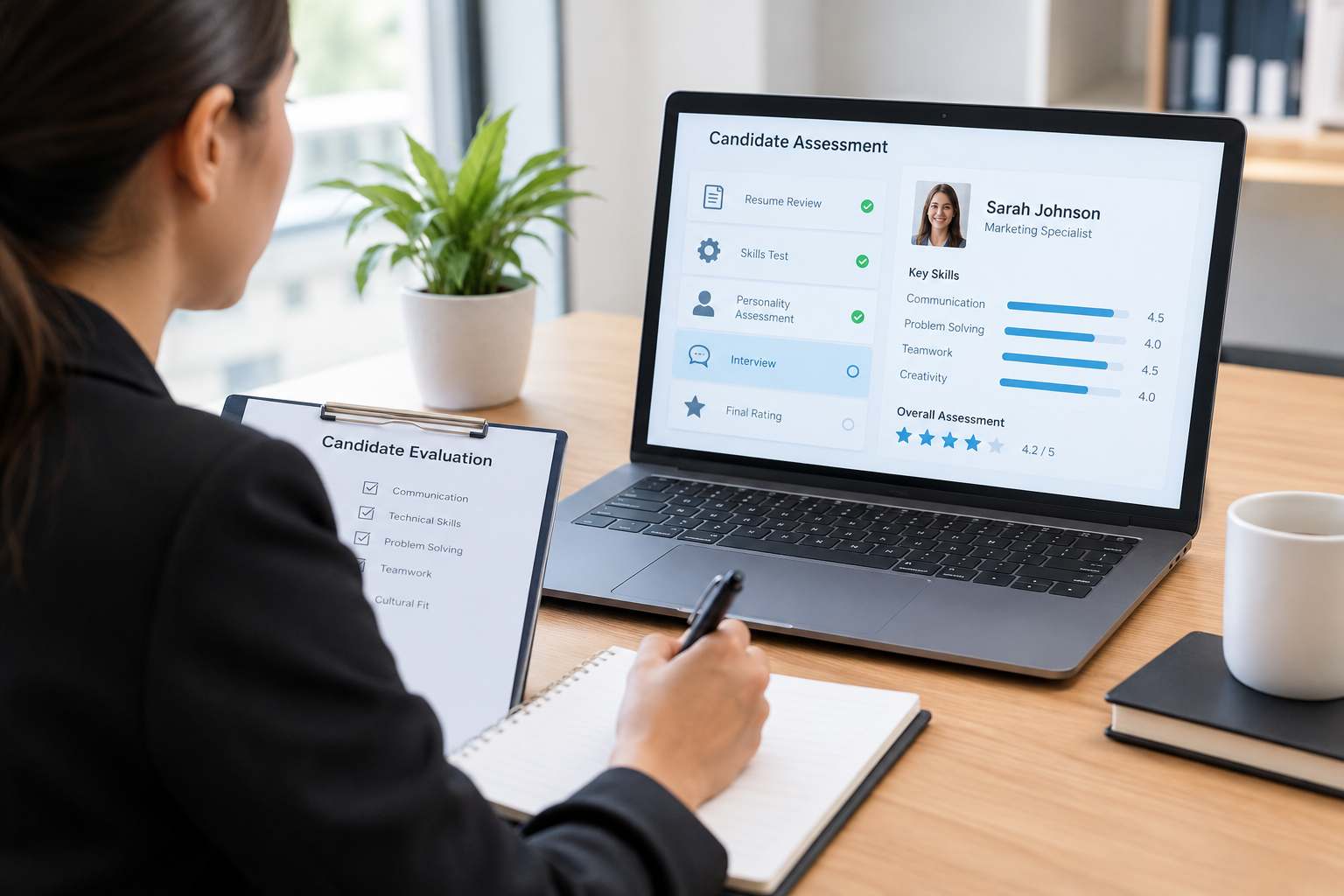
Recruiting companies screen candidates based on their qualifications, skills, and experience. They match these competencies with the client’s requirements. Recruiters may use tools such as application screening, skills testing, and structured interviews. They may also use work samples and reference checks. These strategies provide information before candidates are submitted to clients.
Key Takeaways
- Recruitment firms test applicants against employment requirements.
- Employers may use screening, testing, interviews, work samples, and reference checks.
- Structured methods allow apples-to-apples comparisons between candidates.
- Assessment procedures should be related to the job and be applied fairly.
Applicant Assessment Techniques Used by Recruiting Companies
Recruiting companies use various assessments to identify qualified candidates for specific roles.
Review Resumes and Applications
The first evaluation round screens resumes and applications against the job criteria. The recruiter reviews the candidate’s education, experience, and certifications. They also assess technical capabilities, employment history, and other job requirements. Screening eliminates candidates who do not meet basic requirements before further evaluation.
Work Samples and Skills Tests
Skills assessments evaluate abilities directly related to a job. Tests may assess writing, technical, coding, language, or other job-related skills. Work samples and simulations may mirror actual job duties. The U.S. Office of Personnel Management provides job-related assessment examples. These include work samples and technical skills tests. These strategies provide evidence other than self-reported qualifications.
Structured Interviews
Recruiters may use structured interviews with standardized questions and criteria. The questions are designed to assess the competencies for the role of each applicant. The responses can then be scored against preset standards. Structured interviews simplify comparisons by using the same evaluation framework. The U.S. OPM recommends structured, job-related interviews.
Reference Checks and Background Checks
Reference checks verify candidate information and provide insight into past performance and conduct. Recruiters may check references after candidates pass earlier assessments.
How Recruiters Read Applications
Recruiters systematically assess candidates against job requirements.
Using Standard Evaluation Criteria
Recruiters often compare evaluation results against job criteria. These criteria come from the job description and hiring requirements. This can include technical competencies, experience, communication, problem-solving, leadership, or other quantitative requirements.
This standardized approach helps recruiting services identify basic requirements. It also distinguishes desirable competencies. It also provides a better basis for determining which candidates to take forward.
Employing a Blend of Assessment Techniques
Several assessment methodologies may be used by recruitment firms instead of one outcome. The applicant can successfully pass the initial screening and technical assessment. They can also pass the structured interview and reference verification.
This method uses different techniques to assess job suitability. The U.S. Office of Personnel Management advises combining assessment methods for broader evidence. This can also reduce unnecessary interview rounds.
Conducting Fair and Job-Related Assessments
Assessments should focus on relevant qualifications. They should also measure abilities directly related to the position.
Strict Adherence to Selection Processes
Assessment techniques should be applied consistently. All candidates for the same position should follow the same process.
The U.S. Equal Employment Opportunity Commission outlines standards for employment tests. Selection techniques may create legal issues if they discriminate. They may also cause disparate impacts on protected groups without proper justification.
Therefore, recruiters should employ assessment criteria that are job-relevant. Eligible applicants with disabilities may receive reasonable accommodations. This depends on the assessment and applicable law.
Recording of Assessment Results
Recruiters can track scores and interview notes. They can also record test results, references, and other key information. Accurate documentation helps explain candidate decisions. It also provides evidence for the client’s hiring choice.
Parker Beth presents an example of a recruitment process. It includes candidate screening, interview coordination, and reference verification. Its hiring process shows how a recruiting firm can organize multiple assessment stages. These stages can be managed within a single search.
Frequently Asked Questions
1. What does a recruiter look for?
A recruiter may assess qualifications, experience, and technical abilities. They may review competencies and interview answers. They may also assess work samples and references based on job requirements.
2. Are all recruiting companies using the same assessment methods?
No. Assessment methods vary by job, applicant volume, and required competencies. They also depend on the industry and customer needs.
3. Why do they employ structured interviews?
Structured interviews have the same questions and scoring criteria. It is easy to assess applicants against the same job-related standards.
4. Is skills testing used for all jobs?
No. A skills exam is useful when it measures relevant skills. These skills should relate to successful job performance. The procedure should comply with the needs of the role.